By Tom Mattingly
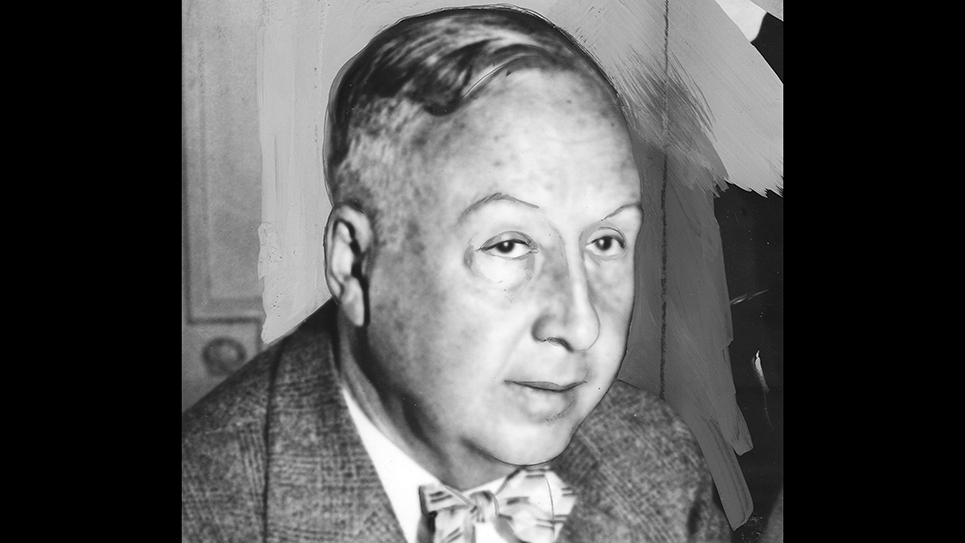
Knoxville pharmacist Earl C. Hudson (June 17, 1926 – June 24, 2017) had an eventful life over the course of his 91 years and seven days.
He was totally dedicated to his family, his church, his community, his chosen profession of pharmacy, and his life with a number of Bluetick Coonhounds named “Smokey.” He also found time to co-author our 2012 book on the history of the Smokey mascots (“Smokey: The True Stories behind the University of Tennessee’s Famous Mascot”).
He was an integral part of one of the great stories in University of Tennessee history that began in 1953. His life story recounts the more than 60 years that dogs named Smokey have graced the sidelines at Vol football games and been part of the ambience of the campus and community.
It started 72 years ago, as the U.T. Pep Club went searching for a mascot, a move designed to improve school spirit on campus and at Volunteer football games. In 1953, the University of Tennessee Pep Club held a contest to select a coonhound, a breed common to Tennessee, to serve as the school’s live mascot.
Announcements of the contest in local newspapers, including one penned by John Ward, then a reporter for the Knoxville Journal, read, “This can’t be an ordinary hound. He must be a ‘Houn’ Dog’ in the best sense of the word.”
By vote of the fans seated in the student section on the east side of Shields-Watkins Field at the Mississippi State game Sept. 26, the spotlight ended up shining squarely on “Brooks’ Blue Smokey” and his owner, the Rev. W. C. (Bill) Brooks, who was Earl’s brother-in-law.
Smokey I debuted on Shields-Watkins Field the next week before the Duke game. The new mascot would not taste the thrill of victory until a week after when the Vols defeated Chattanooga.
When Pep Club president Stuart Worden and Rev. Brooks cut the deal for “Brooks’ Blue Smokey” to become Smokey I, they did so with a handshake. “That’s the way things were done in those days,” said Worden.
Rev. Brooks promised Worden the dog would be at every game. With just a couple of exceptions, due to local quarantines or stadium policies on the road, that’s been the case over the intervening years.
Rev. Brooks died in the summer of 1986, and his wife, Mildred, took over, with Earl being in the wings to take care of his sister and Smokey VI whenever the need might arise.
“In 1993, Mildred was apprehensive about Smokey VII’s care and decided to bring him home,” Earl said. “That’s where I came in. It was a matter of a brother helping his sister.”
As Mildred’s health worsened, Earl finally took over caring for Smokey VII and those who would follow full-time in 1994. Mildred died in 1997. Earl handled the Smokeys from that point forward and later found new dogs in Sonora, Ky., Goose Creek, S.C., and Shelbyville.
In Goose Creek, Earl remembered kennel owner Jim Hackworth wanting $300 for the new dog. Too much money, Earl thought. Then came an epiphany that cinched the deal. He told Hackworth that the dog would become Smokey IX, the mascot of the University of Tennessee Volunteers. That settled that. Hackworth knocked a hundred bucks off the price, from $300 to $200.
Smokey VIII and IX stayed at the Hudson residence on Mountaincrest Drive in North Knoxville and became a much-loved part of the family and the neighborhood.
In late 2011, Earl talked about a changing of the guard. Smokey IX’s future was in doubt due to a knee injury, and Earl was thinking about passing the torch of caring for the dog to his son, Charles.
Robert Moser, one of Smokey IX’s handlers in 2011-12, had the first inkling there was a change in the works. “I think Mr. Earl is getting ready to hand it over to Charles. That’s way above my head, but I wouldn’t be surprised.”
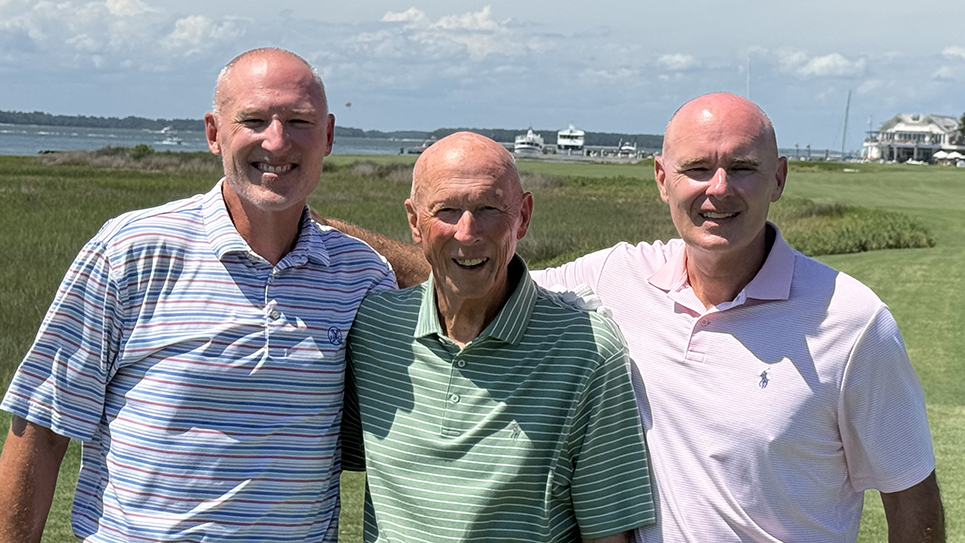
That event occurred on Nov. 10, 2012, as Charles took over caring for the dog when Charles, Earl, and Smokey IX gathered at his home near Beaver Brook Country Club north of Knoxville.
In what had to be an emotion-laden moment, the “changing of the guard” from Earl to Charles took place, albeit very quietly. Charles remembered that his dad called it a “momentous occasion,” the passing of the dog from father to son.
Smokey X was introduced along with the Hudson family at the 2012 Tennessee-Missouri football game at Neyland Stadium and had served since the 2013 season, still leading the Vols onto the field, home and away. His son, Smokey XI, recently retired.
Earl died on June 17, 2017. At his service, next to the casket was a copy of the Hudson/ Mattingly book. That was something Earl took great pride in co-authoring.
Earl’s life was definitely an inspiring story, one reflecting love of school, commitment to a person’s word, and all those other values we hold dear in our society. Over the years, the Smokey mascot has been in good hands.
Earl Hudson wouldn’t have had it any other way.