By Tom Mattingly
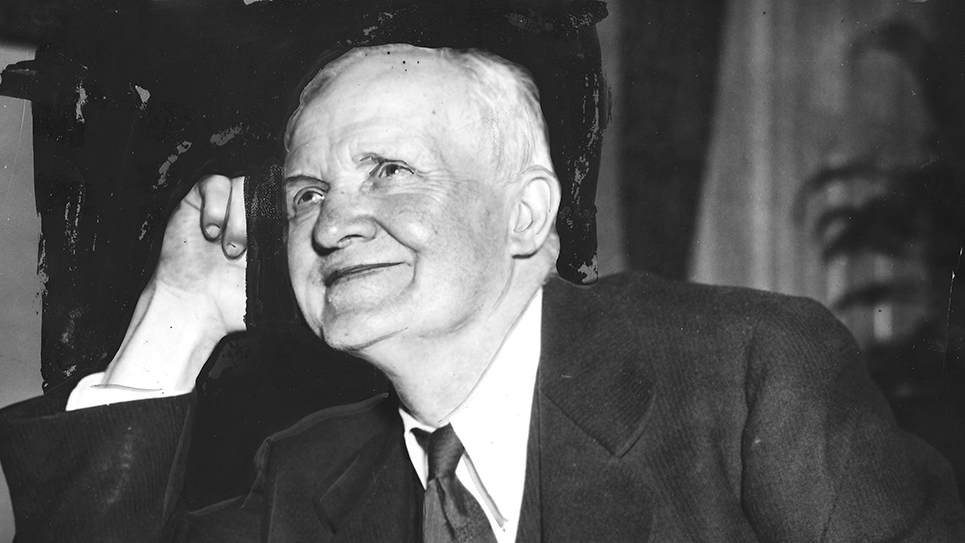
When news broke the morning of June 3, 2020, that former Tennessee tailback and head football coach John Majors now belonged to the ages, everyone who knew him weighed in with a number of different perspectives of a Tennessee legend.
Majors would have celebrated his 91st birthday Thursday, May 21, 2026.
Majors was a true son of Middle Tennessee. He was twice given the chance to impact the fortunes of the University of Tennessee, first as a player from 1954-56, then as head coach from 1977-1992, and made the most of the opportunities. Those opportunities led to his 1987 induction into the College Football Hall of Fame.
First, there was his name. He was born John Terrill Majors on May 21, 1935, named after his mother, John Elizabeth Bobo Majors. His family called him “John.” From his boyhood days on, his Lynchburg friends had called him “John Terrill.” He is listed in the letterman’s section in the Tennessee Football Media Guide as “John Majors.”
His mother once said she sent three boys to the University of Tennessee named John, Bill, and Bob, but also noted they came home known as Johnny, Billy, and Bobby. Sam Venable of the Knoxville News Sentinel wrote June 14, 2020, that Majors let it be known he had never liked the moniker “Johnny.”
News Sentinel sports editor Tom Siler called him Johnny from the beginning of his college playing days in 1954, but, in News-Sentinel game stories, sportswriter Bob Wilson called him John “Drum” Majors. News Sentinel cartoonist Bill Dyer, termed him “Drum” or the “Solid Gold Cadillac” in his carton coverage of Vol football.
Majors brought style to the Tennessee uniforms, adding a splash of white trim to the traditional orange jerseys. When it came to the road uniforms, Majors swung for the fences, outfitting the Vols in orange pants for road games… and occasionally for home games. The orange pants debuted at Alabama on Oct. 15, 1977.
When the Vols played host to Vanderbilt on Nov. 26 that season, the Vols emerged from the old dressing room on the East side clad in orange shirts and orange pants. The effect was stunning, as was the final score, Tennessee 42, Vanderbilt 7. Players said after the game that the orange pants gave them an extra motivational edge.
Vol fans debate whether the 1991 Notre Dame game, the 1986 Sugar Bowl victory over Miami, or the 1982 Alabama game were the greatest of them all, but each game can stake a legitimate claim.
Majors stood at the edge of the end zone supervising the Friday afternoon walk-through before the 1991 Notre Dame game. He casually mentioned that the stadium turf had been prepared to minimize Tony’s impact on the 1976 game, terming it “higher than an Iowa cornfield.”
The “Fighting Irish” had one of those long, intimidating drives to start that game, and Pitt hadn’t responded well in its first series until Dorsett broke a 61-yard run, and the Panthers tied the game moments later. They went on to a 31-10 victory.
Late in the afternoon of Nov. 9, 1991, the Majors voice was in full flower as he described the Vols’ comeback from a 31-7 second-quarter deficit to a 35-34 win. Majors had never looked happier, flashing that famous gap-toothed smile. John Ward’s post-game call was vintage.
“Tennessee beats Notre Dame 35-34. The Volunteers go home victorious. Notre Dame goes with the sophomore replacement kicker. It is no good, off to the right. The coaching staff to our left is jubilant, as are Tennessee fans. You could not write this script.”
A year later, however, the script had changed, with talk of broken promises, strained relationships, and disloyal behavior. “Source stories” abounded in media across the state and well beyond. The Vols were in the midst of a three-game losing streak.
There was a media conference Nov. 13, 1992, at the Wilson World Hotel the night before the game at Memphis State. It followed weeks of speculation that a change was in the works.
Majors resigned that mid-November evening, saying in part, “Since I have not been given the opportunity by the UT administration to remain as head football coach, I am, effective Dec. 31, 1992, relinquishing my duties connected to the University of Tennessee.”
Fans at the hotel and at the game the next day seemed shocked at what was transpiring, gathering with saddened faces, many fighting back tears, not believing what was happening. Looking back, 1992 was a year of travail, one of the strangest in Vol history. Emotions ran high.
That’s the way it is when a native son, a program hero, steps down, deserving, as Russ Bebb wrote, a “far nobler farewell.” Another Tennessee football historian has written that, “Somehow, some way, you wish that it had all turned out differently.”
“He is, deservedly,” wrote Marvin West, “one of the most revered figures in the wonderful history of the Volunteers.” In Marvin’s ranking of the top 26 Vols ever, Majors ranked No. 2, behind only Gen. Robert R. Neyland.
The passage of time cannot diminish the memories and contributions of a man named John Majors.