Elective political careers frequently have a short expiration date, while others keep going until they literally drop. Much of the longevity depends upon circumstance, timing, luck and ability. Some political careers are the result of careful planning and plodding progress over a period of time. Others blaze across the political horizon like a comet and burn out just as quickly. Some political careers begin almost as an afterthought.
Edward Peter “Ted” Carville served six and a half years as governor of Nevada. Carville’s own career in elective politics likely would never have happened had it not been for a setback dealt to him by the most influential member of his own Democratic Party: President Franklin D. Roosevelt.
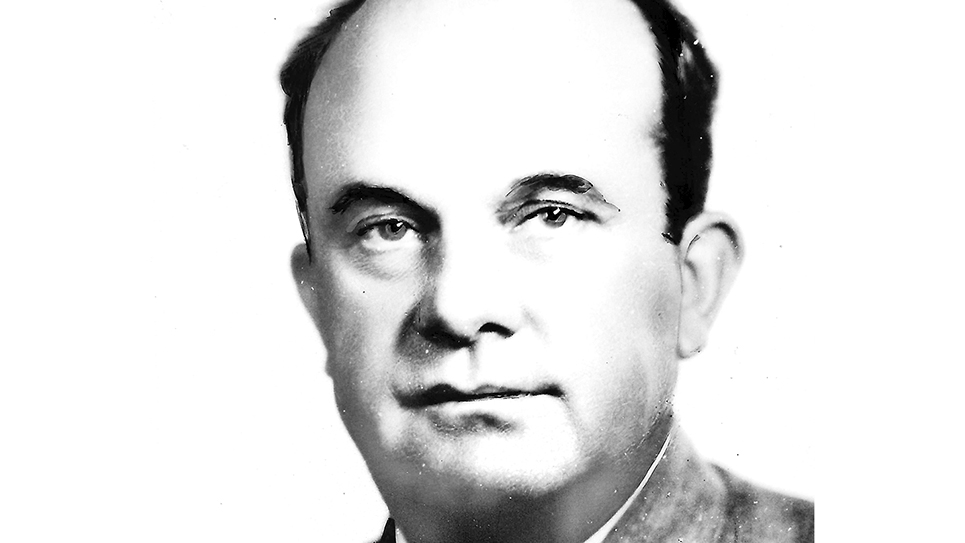
Carville was a man of average or slightly below average height with a stocky build and bald on top. Never especially photogenic, Carville looked like the small-town lawyer he was for many years.
Throughout his career, E. P. Carville had served in some of the highest positions available to an attorney, including serving as a district attorney, district judge and United States Attorney. Carville’s elective career began with his running for governor and he served a brief period in the United States Senate.
The child of pioneering parents, Carville attended Notre Dame University, where he graduated from law school. Carville returned home to Elko and commenced the practice of law in 1909. Carville became a deputy district attorney and quickly rose to the top job in the district attorney’s office the same year. Carville was elected district attorney in 1912 and held the spot for six years before resuming his private practice. Eight years later, E. P. Carville ran for a district judgeship and was elected. Carville was still serving as a judge when President Roosevelt nominated him to serve as Nevada’s U.S. Attorney in 1934. Nevada’s two United States senators, Key Pittman and Pat McCarran, did not get along, although both were Democrats. Indeed, Pat McCarran didn’t especially get along well with anyone unless they were subordinate to him. Senator McCarran had pushed Carville for U.S. Attorney and he was appointed by Roosevelt and confirmed by the Senate. Many believed, including other lawyers, that Carville was one of the best U.S. Attorneys Nevada ever had.
Senator McCarran had earned the wrath of Franklin Delano Roosevelt in 1938 for having opposed his effort to pack the U.S. Supreme Court. Roosevelt considered attempting to purge McCarran, who was seeking reelection that year, but the senator was too popular. FDR said a kind word about McCarran’s primary opponent and refused to reappoint Carville as U.S. Attorney despite his good record in office.
That started a protest amongst many Democrats in Nevada who urged Carville to become a candidate for governor as incumbent Richard Kirman was not seeking a second term. E. P. Carville became a candidate and won the Democratic primary, aided by the powerful political organization of Pat McCarran. Roosevelt’s intransigence had put out a U.S. Attorney, but had elected a governor, which in turn made Pat McCarran even more influential in Nevada.
Throughout his career, both in the judiciary and out, Ted Carville had earned a reputation for integrity and ability.
One of the most difficult tasks any governor can have is filling the seat of a United States senator who dies in office or resigns. There is almost always a host of ambitious politicians hungering for the appointment and navigating that political minefield requires not only good judgment but a light touch. Sometimes the choice is so obvious that few expect anything else; other times, a choice is highly unpopular or perhaps controversial. Then there are those occasions when a governor surprises everybody. That is precisely what Governor E. P. Carville did when he appointed Berkeley Bunker to the United States Senate after the sudden death of Senator Key Pittman. The 35-year-old Bunker had been in the Nevada State House for four years and had served as Speaker for less than two years. “He typically represents the young manhood of Nevada,” Carville told newsmen. Nobody was more surprised by the appointment than Berkeley Bunker. A filling station owner and bishop in the Church of Latter-Day Saints, Bunker was the first Mormon to represent Nevada in the United States Senate.
Carville had managed to sidestep the feuding inside his own party, although Vail Pittman, brother of the late senator and lieutenant governor, was outraged he had not been appointed. Pittman apparently considered his brother’s seat in the U.S. Senate more of a family keepsake than an elective office. Governor Carville had managed to navigate the rapids of factional politics in his home state and he was easily reelected to a second term as governor.
By the 1940s, gambling had become big business in Nevada and had never been taxed; one only needed a license. In 1945, Nevada’s state legislature considered a bill to place a 10% tax on the gross profits of all establishments that allowed gambling. That immediately caused a terrific uproar of protest. Even when the tax was lowered to 1%, the gambling lobby was still yelling. The legislature passed the bill over the protests of the gambling interests, which meant it went to the governor’s desk. The arrival of the tax bill made Governor Carville mighty nervous. TIME magazine noted Carville “hemmed, hawed, called for a public hearing” before finally deciding to let the bill become law without his signature, likely making exactly no one happy.
That same year, Carville made another fateful decision. E. P. Carville had been suspected of having senatorial ambitions for a few years and had been reportedly eyeing the seat of ailing U.S. Senator James G. Scrugham. Scrugham died on June 23, 1945, and for a month Nevada only had one U.S. senator. Finally, Carville resigned as governor to accept appointment by Acting Governor Vail Pittman to fill the senatorial vacancy on July 25, 1945. Many Nevadans did not like the way Carville got to the Senate. Governors who, in essence, appoint themselves to the United States Senate have a history of losing the next election.
Having himself appointed to the Senate immediately caused friction between Carville and former Senator Berkeley Bunker, who was then serving as Nevada’s congressman-at-large. Bunker was eager to go back to the U.S. Senate and had been anticipating another race with the sickly Jim Scrugham. Congressman Bunker was not deterred from seeking his party’s nomination for the Senate by the fact it had been Ted Carville who had raised him from obscurity in the first place and appointed him to succeed the deceased Key Pittman in 1941. Bunker’s ambition to return to the U.S. Senate by running against his one-time benefactor gave quite a few Democrats pause. Many Carville Democrats never forgave Berkeley Bunker, which would bring him to political grief.
During his year and a half in the U.S. Senate, Edward P. Carville became the champion of ending government subsidies, which he believed were responsible for the burgeoning debt of the United States. “It is time for the state to accept less federal aid and to assume that portion of the burden that they can stand better than the federal government,” Carville said. While it might have been a principled conviction, politically it was an unpopular position inside his own party.
As Senator Carville returned home to Nevada to begin a tour of the state, he stepped off the train in Carlin, where he handed reporters a press release announcing he would seek to be elected in his own right to the Senate in 1946. The release stated Carville intended to file his candidacy officially with the Democratic Party of Nevada. Carville noted the importance of seniority in Congress and stated he would have 18 months of service in the United States Senate, something no other candidate could bring to the race. Carville ticked off the various issues of importance to the Silver State, including agriculture, mining and ranching.
Carville made the announcement of his candidacy in Elko County, where he had been born. Throughout his political career, dating back to his first election as district attorney, Carville had always made his announcement of candidacy in his home county. As he had never lost a primary or general election, the senator thought it had brought him luck. That luck was about to run out.
Just after announcing his own candidacy to run for a full six-year term, Senator E. P. Carville spoke to a gathering in Reno where he said, “If we continue to allow our unalienable rights of self-government to slip away from us, from our counties and states and into the hands of the federal government, the day will come when we no longer will have the ability to govern ourselves, even when we so desire. Our priceless heritage will be gone.”
Berkeley Bunker, undeterred by Senator Carville’s candidacy, announced his own. Bunker had run at the top of the ticket in winning a seat in the House of Representatives in 1944. While in the Senate, Bunker had been a strong supporter of Franklin Roosevelt and his administration. Considerably younger than Carville, Bunker said he believed he could accomplish more for Nevada in the Senate than in the House. The congressman said he wished to help “Nevada and the west into a greater empire of opportunity.”
As usual, Pat McCarran was resentful of his junior colleague, and much of his formidable machine moved in behind Congressman Berkeley Bunker.
Ted Carville and Berkeley Bunker had once upon a time been warm political friends. Governor Carville had helped the young state representative get himself elected as Speaker of the Nevada House of Representatives. Carville, in fact, had appointed Bunker twice to the United States Senate, first for the unexpired term of the late Key Pittman and secondly to the term beginning January 3, 1941, until the next regular election in 1942. To appoint Bunker, Governor Carville ignored the all too obvious senatorial ambitions of Congressman-at-Large James Scrugham, who was very likely the most personally popular politician in Nevada. Many Democrats could not get past the fact Berkeley Bunker’s ambition had ended the friendship between the two men.
Still, as the primary approached, Bunker was generally believed to be in the lead, although some believed Senator Carville was gaining on the congressman. Election Day proved Carville could not overcome the stigma of having resigned from the governor’s office to accept appointment to the Senate. Charles Gossett of Idaho had done the same thing and had also been defeated inside the Democratic primary. Berkeley Bunker beat Ted Carville decisively, winning with 55% of the vote.
In defeat, Senator E. P. Carville was gracious, congratulating his opponent and thanking his supporters. Bunker’s challenge to Carville had been successful and while he won the battle, he lost the war. In what proved to be a Republican year, GOP senatorial nominee George Malone received considerable support from Carville Democrats who refused to back Bunker. Malone’s victory was one of the biggest upsets in a night chock full of election upsets. Berkeley Bunker would never win another general election.
Ted Carville returned to the practice of law in Reno with his son and namesake, who was a Republican. While the former governor and senator indicated he was not going to seek office in 1950, he did not close the door to the idea. “I still haven’t said I’m not going to run for office,” Carville told a reporter. “I’m not saying anything for the time being. I’m just sitting and watching.”
Carville and his wife were devastated when Edward D. Carville, only 38-years-old, died of a massive heart attack in the law office he shared with his father in 1951. Another son, Richard, died the same year.
Carville never did seek elective office again, but instead worked on his lucrative law practice. The 71-year-old former governor began ailing from a heart condition and suffered a heart attack on June 27, 1956. Carville died in the ambulance on the way to the hospital. Ted Carville was laid to rest in Reno.
© 2026 Ray Hill