By Tom Mattingly
Football fans, particularly in the South, often make critical, life-changing decisions about team allegiances in their most tender years and live with the impact of those decisions throughout the rest of their lives.
Former Auburn Sports Information Director and Athletic Director David Housel’s football life is an example.
Housel attended his first Alabama-Auburn game (or is it Auburn-Alabama?) at Legion field in Birmingham in 1956, when he was 9 years old. After attending the game, Housel wrote letters to both schools, asking for information about their football teams.
Housel relates that Auburn sent him a football brochure, along with a note thanking him for being an Auburn fan. Alabama sent him a media guide and a bill for two dollars. As a result, Alabama got its two bucks. Auburn earned his heart.
The whole business about rivalries doesn’t have to make sense. You wake up on the “Third Saturday in October” and it’s time to beat Alabama. In October or November, it’s time to beat Kentucky or Vanderbilt.
Fans make every effort to be present, regardless of the weather. They do what it takes to obtain the requisite number of tickets, pull together the tailgate, and ensure that everyone in the travel party awakens on time to head toward Neyland Stadium or hit the road.
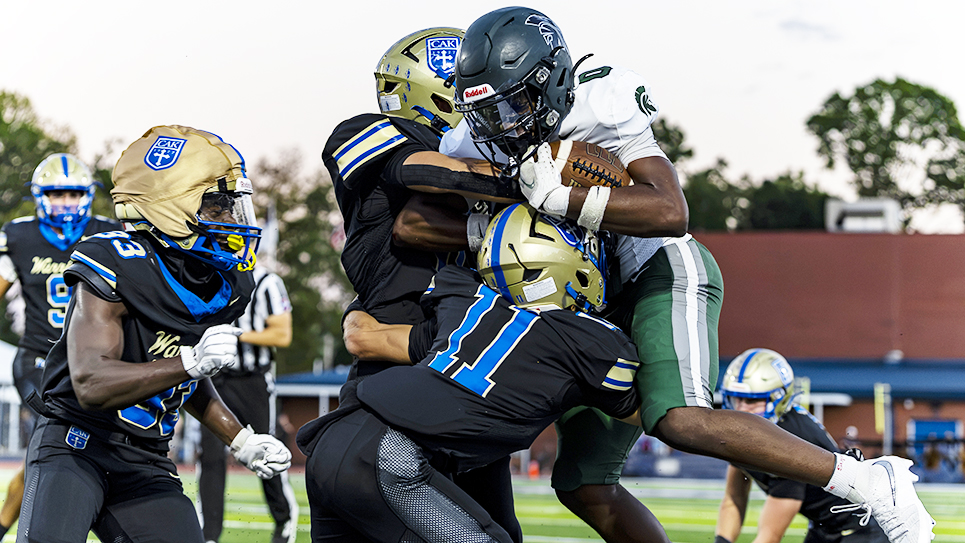
That’s why there is something different about college football in the South. There’s a different feeling in a southern stadium. No doubt about it. Try as they might, the pro version — even in Green Bay, Pittsburgh, or Denver — can’t replicate the feelings college football engenders, feelings that are hard to put into words.
You can’t create it and nobody really knows how to define it, but we all know it when we see it, know it when we feel it, especially in the Southeastern Conference (SEC).
The fans bring a unique perspective, a unique frame of reference, to the games, simply because they grew up watching their school play, might have attended games with their future spouse, and wouldn’t dare dream of rooting for any other team, despite the occasional ups and downs every school’s football program has now and then.
In the SEC, we find that events on the field sometimes carry over into everyday life, all part of the rivalries, some ancient, dating 100 years or more, with others of more recent occurrence. There are figurative and literal lines drawn in the sand between otherwise rational and reasonable people, people who take the proceedings seriously.
There are those great explosions of noise, almost primordial in nature, that envelop a stadium when a losing streak is broken or as revenge for some past loss, however far back in history, is attained. It’s amazing to be a part of it, win or lose, but it’s more fun when you win.
When Alabama played at Auburn the first time in 1989, the publisher of one magazine about the Tide program noted that it wasn’t every fan of the Crimson Tide who had to go to Auburn, just 9,000 of them, at least according to the game contract. That attitude is not as extreme or as confined to trips to Auburn or Tuscaloosa as you might think.
When the game was finally scheduled, there were bumper stickers on cars owned by Tide faithful that read, “Your a– on your grass.” Auburn did have the last laugh that day, but Alabama did win at Auburn in later years, just as Auburn has won at Tuscaloosa.
There were also bumper stickers on aging Auburn cars that read: “Punt, Bama, Punt,” harking to the two blocked punts, each returned for scores, that highlighted Auburn’s 17-16 win in the 1972 “Iron Bowl.”
It’s all in good fun, but occasionally it is taken too seriously, when it really shouldn’t be. Remember the name Harvey Updyke and the poisoned trees at Toomer’s Corner, for example.
In Mayberry, Sheriff Andy Taylor was trying to break up a feud between the Wakefields and the Carters so their children could marry (“A Feud Is a Feud,” Episode 9, Dec. 5, 1960). When he tried to get them to explain what was going on and why, he received an example of circular reasoning at its very best, the explanation you get when you try to get a fan to explain how and why they chose their favorite team.
“Why are you shooting at each other?” Andy asked. “Because we’re feuding,” was one man’s answer.
“Why are you feuding?” Andy asked.
“Because we’re shooting at each other,” was the response.
That sent Andy over the edge, particularly when each man said he didn’t know why they were feuding, and nor did any of their ancestors. (By the way, Andy talked them out of feuding, appealing to family pride, and the nuptials went on as planned.)
That’s the way it is with rivalries. This business of being a fan is really quite amazing. You can’t always explain the importance, but it’s there.
It’s an integral part of life as we know it. There’s nothing better than the anticipation of a game, seeing the game itself, and then having it be a part of your life until your team plays again.