By John J. Duncan Jr.
One night in the summer of 1958, Joe Seymour, batboy for the visiting team playing against the Knoxville Smokies, fell and broke his arm running to get a stretcher for a player who had been hit in the head by a ball thrown by a Smokies pitcher.
I happened to be at the game that night, wearing a baseball uniform, having come straight from a game I had played in at the Chilhowee Park Little League. When asked if I could immediately fill in as visiting team batboy, I jumped at the chance.
I did not know it that night, but I would end up spending five and a half seasons as a batboy at Bill Meyer Stadium, the first and last seasons for the visiting teams and the four in between for the home team Knoxville Smokies.
Minor league baseball was such a shoestring operation in those years. I worked for free the first two seasons and $1.50 a game for the last four. This usually meant five or six hours of work (fun) at each game, and I loved it.
My freshman year at UT, I was the public address announcer at the Smokies games in addition to a part-time job as a salesman at Sears. Once again, my baseball work was free.
In my Focus column of October 5, 2020, I told the story of how my father, as a young lawyer in 1956, put together a group that bought the baseball team in Montgomery, Alabama, and moved the team to Knoxville to become the Smokies.
That team was in last place because it did not have a working agreement with a major league team. It was independent and just had hand-me-down players from several different teams.
In those years, minor league teams sometimes owned players themselves, and the Smokies acquired the contract of just one player—a second baseman named Earl Weaver.
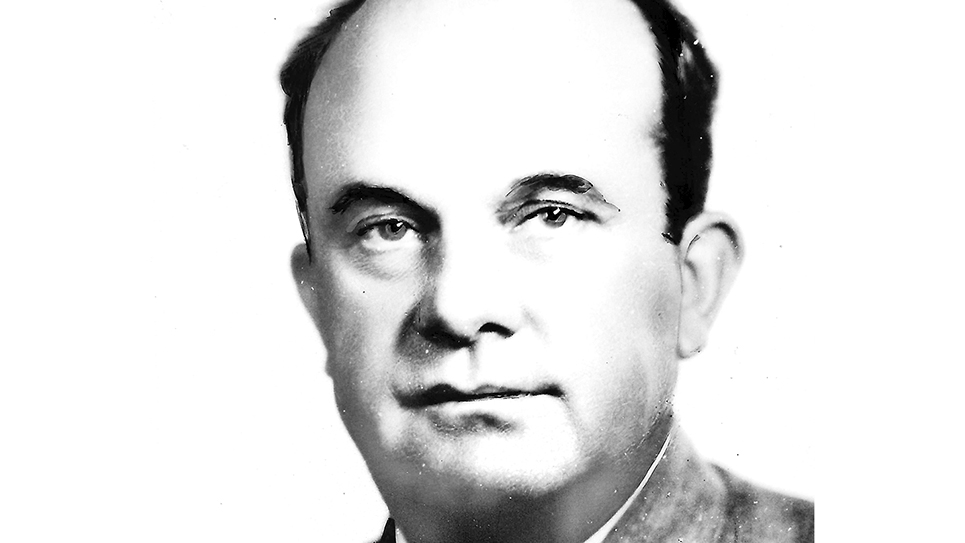
Daddy was president of the Smokies organization. In order to save money, he decided not to keep the team manager, Dick Bartell, but instead to name Earl Weaver as the playing manager.
That spring, my Dad met with Harry Dalton, the farm (minor league) director for the Baltimore Orioles, on the patio at Holston Hills Country Club. They agreed for Knoxville to become a farm team of the Orioles if Baltimore would take Earl Weaver, the only player still under contract to the Smokies.
Mr. Dalton said he could make Weaver the manager of the Orioles rookie league team in Fitzgerald, Georgia. Even most big sports fans in East Tennessee do not know that Weaver’s Hall of Fame managerial career started with the Knoxville Smokies.
Part of this story is told in a new book by John Miller entitled “The Last Manager—How Earl Weaver tricked, tormented, and reinvented baseball.” Columnist George Will said, “Baseball books don’t get any better than this.”
The book explains that 1948, Weaver’s first year as a professional player, was the high-water mark of minor league baseball with 430 teams. Now there are only 120.
Weaver was signed by the St. Louis Cardinals for $175 a month and was sent to play for the team in West Frankfort, IL, a town of 15,000. On the first pitch of his first game, he hit a home run.
“Once settled in West Frankfort, Earl rented quarters in a rooming house at a special rate of $5 a month because he was a ballplayer. Every day, with his $1.25-a-day meal money, he ordered two eggs, bacon, toast, grits and coffee for twenty-nine cents at the Little Egypt….” (a diner).
When I worked for the Smokies many years later, minor league baseball teams were still low budget operations, and the players (and the batboys on their once-a-season road trip) were given $22.50 a week meal money.
Weaver had four great minor league seasons and a really good spring training with the big league Cardinals in 1952, but he was cut from the team because Eddie Stanky, the playing manager, wanted the second base position.
Miller’s book says, “Instead of motivating him, the rejection drove him to drink, sent him on a purgatory through the minor leagues….He threw in the towel and would never again play as well as he had those first four seasons in the minor leagues.” The chance to manage in Knoxville turned things around for Weaver and may have saved his life.
I don’t know how much Daddy and the group he headed paid for the Montgomery team. Baseball was still popular in the 1950s and early 60s. But by the late 60s and 70s, you couldn’t even give away a minor league team.
I went to the baseball winter meetings in San Diego in December of 1985. At one of the meetings, we were told a man had bought the Richmond triple-A team in 1978 for $25,000 and was given five years to pay for it. Now, AAA teams are worth $30 million to $50 million, and a couple of top-tier teams have sold for much more.
CBS bought the New York Yankees in 1964 for $11.2 million, lost millions, and sold them in 1973 to a group headed by George Steinbrenner for $8.8 million. Today, that franchise is reportedly worth five billion and is still controlled by Steinbrenner’s family.
Baseball was such a big part of my life until the early 90s that I could possibly write a book filled with baseball stories. I don’t enjoy it nearly as much now, though, because I think the salaries in all big-time sports are so excessive that it is almost sinful.