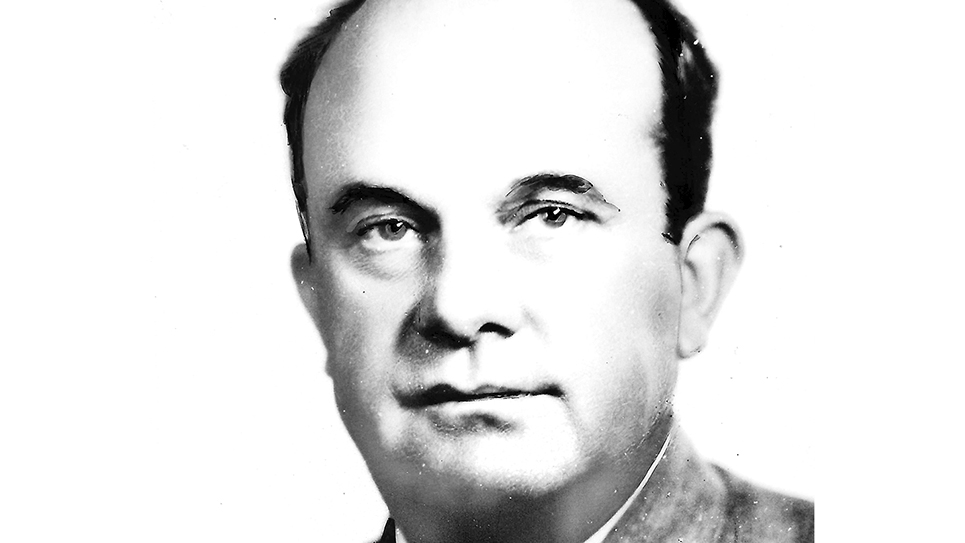
By John J. Duncan Jr.
Jan. 20, 2025, in his second Inaugural Address, President Trump said: “We will measure our success not only by little battles we win, but also by the wars that end, and perhaps most importantly, the wars we never get into.”
In April of 2016, I was one of six members of Congress invited to the Mayflower Hotel in Washington to hear candidate Trump’s first major speech on foreign policy. He said he was going to apply America First policies to foreign as well as domestic affairs.
Trump said then that since the end of the Cold War, the U.S. had made decisions in which “logic was replaced with foolishness and arrogance, which led to one foreign policy disaster after another.”
He was the only Republican candidate who criticized our war in Iraq and said we were “rebuilding other countries while weakening our own.”
Because of statements like these and his actions in Venezuela, I hope and believe that President Trump will end the war against Iran very quickly. I don’t believe he will make the same mistake President George W. Bush did in allowing the Iraq war to go on long after he stood in front of a huge banner saying “Mission Accomplished!”
It is very significant to me, and I hope to President Trump, that our two greatest military leaders who later became president, Washington and Eisenhower, were both very anti-war.
Washington’s farewell address has been read on the floor of the U.S. Senate every year since 1862, near the time of his birthday. In that address, Washington warned against “overgrown military establishments which, under any form of government, are inauspicious to liberty, and which are to be regarded as particularly hostile to republican liberty.”
He also said, “A passionate attachment of one nation for another produces a variety of evils. Sympathy for the favorite nation, facilitating the illusion of an imaginary common interest … betrays the former into a participation in the quarrels and wars of the latter without adequate inducement or justification.”
Likewise, President Eisenhower, in his farewell address, spoke of the “grave implication” of our “immense military establishment and large arms industry.”
He said: “In the councils of government, we must guard against the acquisition of unwarranted influence, whether sought or unsought, by the military-industrial complex. The potential for the disastrous rise of misplaced power exists and will persist.”
In a speech broadcast from London in 1959, Eisenhower said, “I think people want peace so much that one of these days, governments had better get out of the way and let them have it.”
I spent most of my life thinking it was necessary to drop the bombs on Hiroshima and Nagasaki to end World War II. Last year, I read in Bret Baier’s book “Three Days In January” and other places that Eisenhower expressed his “grave misgivings” about this bombing to both Secretary of War Stimson and President Truman, telling them that Japan was already ready to surrender and that it would not save any American lives.
On April 16, 1953, Eisenhower gave probably the most anti-war speech ever given by an American president. In his first major speech as president, to the American Society of Newspaper Editors meeting in Washington, he gave many examples of the tremendous cost of an arms race.
“The cost of one modern heavy bomber is this: a modern brick school in 30 cities. One destroyer could have housed eight thousand people.” And he gave many other similar examples. He added that this is “humanity hanging from a cross of iron.”
According to AI, Iran’s total military budget was somewhere between $7.8 and $10.3 billion, or about one percent of ours. Israel’s annual military spending is about four times that of Iran, and Israel has about 300 nuclear bombs to zero for Iran. Even with some hidden or unreported spending, the highest possible estimate for Iran’s military budget would be only two percent of ours.
As this column is being written, Iran has been shown to be a very weak paper tiger. The U.S. military has sent 50,000 troops and 200 jets and has hit over 2,000 targets and sunk 10 Iranian ships. Most of Iran’s top leaders were killed in the first hour of fighting.
Iran’s refusal to give in to U.S. demands has to be one of the biggest mistakes in human history. For the sake of their own people, its leaders should have been begging for peace.
Iran has already lost this war. Any continued resistance on its part is little more than a suicide mission. But all Americans should hope this fighting ends quickly for two main reasons: first, we should hope that no more Americans are killed; second, we are $38 trillion in debt and cannot afford to keep spending billions that we do not have fighting paper tigers.
Also, we need to re-establish civilian control of the military, no matter who is president. Our founding fathers believed this was very important. At the Smithsonian Institution in a section about George Washington, these words are displayed: “A triumphant general in Washington’s position might have tried to seize power, but Washington returned to private life. On December 23, 1783, Washington surrendered his commission as General and Commander in Chief. Like many Americans, he saw himself and his army as agents of the Continental Congress. During the war, he deferred to its directives even when he disagreed with them.”
Finally, while he was not a great military leader, President Reagan once (or perhaps many times) said, “Our troops should be committed to combat abroad only as a last resort, when no other choice is available.” I believe both Washington and Eisenhower would have agreed with those words.