By John J. Duncan Jr.
I once got a full-time job as a newspaper reporter because many people on the left do not believe in freedom of speech for those with whom they disagree.
This has been seen most vividly during the rare times that well-known conservatives have been invited to speak at major universities. Left-wing students scream at conservative speakers and shout them down to try to keep them from speaking.
Most universities have to bring in extra security for conservative speakers, but conservative students never treat liberal or left-wing speakers in the same rude or hateful ways.
By the late 1960s, most major universities had become leftist brainwashing factories and, unfortunately, remain that way today. The UT campus in Knoxville was no exception.
I was majoring in journalism and was the token conservative on the UT Daily Beacon, the student newspaper. I had written a weekly column in my junior year and was scheduled to continue doing that as a senior during the 1968-69 school year.
I had worked full-time the summer of 1968 for the Nixon for President Committee, mostly at the national headquarters in Washington, D.C., and for a month at the nominating convention in Miami Beach.
I then was sent for one week each to Jackson, Mississippi, and Shreveport, Louisiana, to do advance work for rallies where Nixon would speak a few days later. They wanted me to keep doing this all through the fall, but I wanted to come back in late September to start my senior year.
When I got back to Knoxville, some anonymous person sent me a copy of the minutes from a meeting of the Issues Committee. This was a student committee that controlled many thousands of dollars to pay well-known public figures to come speak at UT.
The committee had decided to invite only famous left-wing speakers such as Angela Davis, a leading Communist, and Tom Hayden, Jane Fonda’s husband. Probably the most conservative invitee was Hubert Humphrey, the Democrats’ presidential nominee.
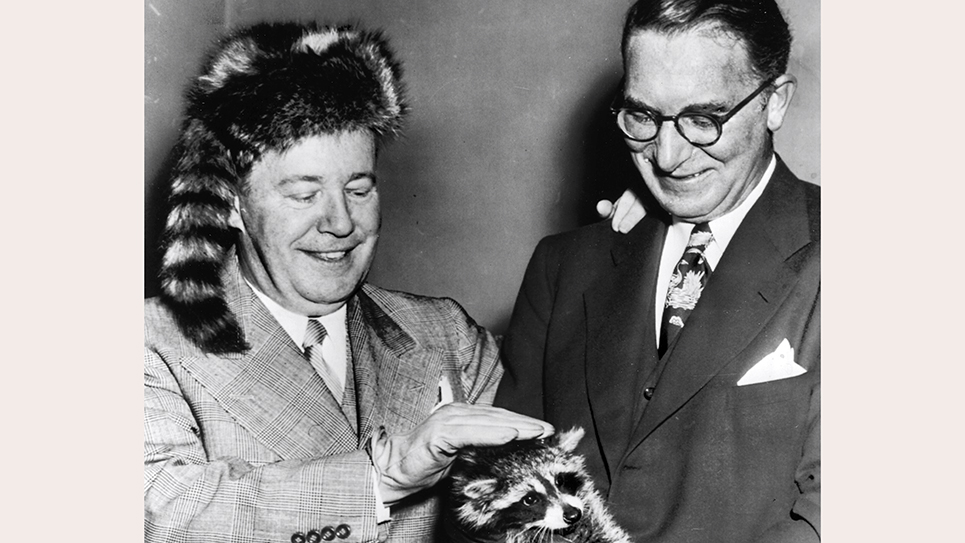
They then had a list of what were described as “potential conservative speakers.” The full list was Cas Walker, a John Birch Society member and a Ku Klux Klan member. It made me mad that these were the kinds of speakers they thought of as conservative.
I wrote a column blasting this obvious liberal bias and recommended 15 very intellectual, very well-respected conservatives, such as Williams F. Buckley and others.
Tom Gillem, a liberal who had spent the summer working for the Nashville Tennessean, was the editor of The Beacon. He refused to print my column with the flimsy excuse that my column had always been on national issues and this was a campus issue.
I decided to take my column to the editor of the Knoxville Journal, Guy Smith. I did not know Mr. Smith, and he had strongly opposed my Dad in all three of his races for mayor. But the Journal was considered the more conservative of our two daily newspapers.
Mr. Smith was an unfriendly, unsmiling man who gave me no encouragement. He said he would take a look at it, but thought it was more appropriate for the campus newspaper.
The next morning, the Journal printed 82,000 copies, 5,000 more than usual, because it was a Tennessee football home game Saturday. I was shocked that my column was published starting at the top of the front page, along with a small snapshot photo of me.
The Beacon editor, Tom Gillem, was so angry that he told me he was removing me as news editor, taking me off the student government beat, and cutting my weekly column to once every two weeks. I told him, “No, you’re not, because I quit.” So much for his belief in free speech.
I then went to Mr. Smith and told him what had happened. He gave me a full-time job as assistant state editor of the Knoxville Journal. It was a nice title, but all it really meant was that I was the lowest-ranking reporter on the staff.
I was always grateful to Mr. Smith for that job, and it was an exciting time to be in the newspaper business. No one likes competition, but it makes everything better. I wish every city had at least two daily newspapers.
The Journal and the News Sentinel were fierce competitors, but that made both papers better. Even though I am still grateful for having been a Journal reporter, I will always be grateful to the Sentinel for endorsing me in all 15 of my elections to Congress.