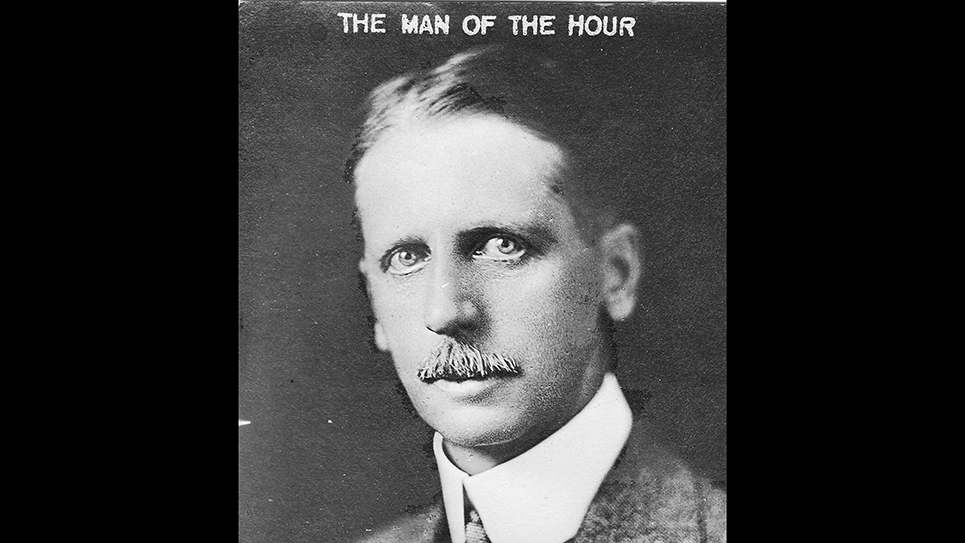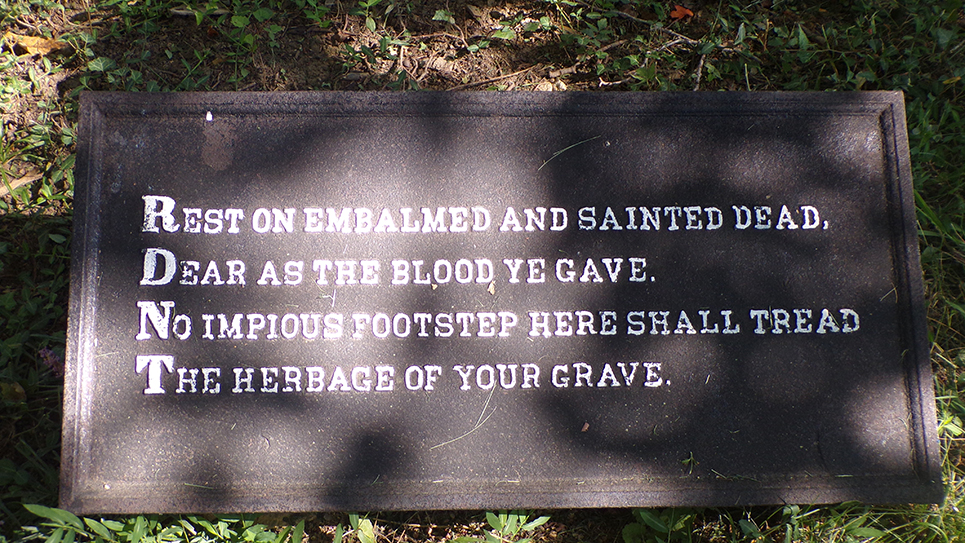
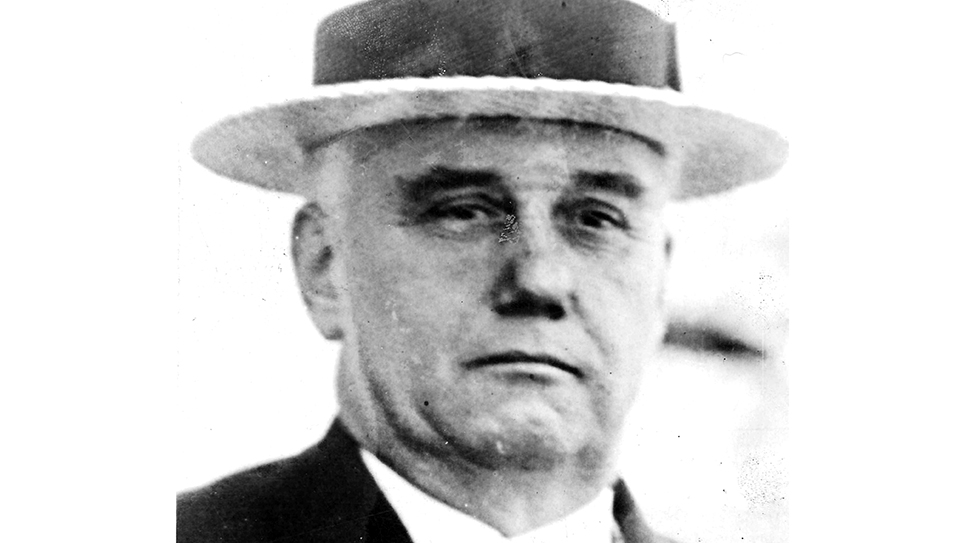
William S. Vare was a very rare species, a Republican big-city political boss. Vare rose to the heights of politics in Pennsylvania and occupied a seat in the U.S. House of Representatives for 14 years. The GOP machine in Philadelphia was notorious in the national media of the time for the “voting of tombstones, alley cats, children and dead men … ”
Boies Penrose, who knew more than most about bossism, referred to Vare as the “ashcart statesman,” due to the latter having once hauled away ashes and garbage. Penrose found Vare to be an irritant in his own rule of Pennsylvania in general and Philadelphia in particular. William Vare was remembered by the Philadelphia Inquirer as “the master mind and the commander-in-chief” of the city’s political organization. Short, stocky and aggressive, William S. Vare was one of those men whose presence could never be ignored.
Vare was elected to the United States Senate in 1926, largely based upon his control of Philadelphia, but questions of corruption and voter fraud caused him to be rejected by the Senate membership, who are the sole arbiters of who has the right to sit amongst that body. That defeat broke William S. Vare, and his health began to seriously decline.
In many respects, the rise of William Scott Vare to the highest councils of American government was the embodiment of an American success story. Vare had been born to a farm family that raised crops and pigs. All three of the Vare sons engaged in the same profession, contracting, and all three were quite involved in politics. Along with older brothers George and Edwin, William Vare became highly successful and prosperous. The brothers remained close throughout their lives. One newspaper recalled that George was considered the politician of the family, while Edwin was the businessman and William the candidate for public office.
The Vare brothers found politics the conduit to expand their contracting business and enjoyed many lucrative contracts from the local government. Their revenue from the city of Philadelphia between 1909 and 1912 was the equivalent of more than $225 million today. At the same time, William S. Vare began climbing the political ladder, getting himself elected to the city council and then recorder of deeds. Vare lost a campaign for the GOP nomination for mayor of Philadelphia in 1911. In 1912, Vare rebounded by winning election to the U.S. House of Representatives. As a congressman, Vare was surprisingly progressive and took firm stands against child labor while supporting a federal income tax. Congressman Vare also supported unions being able to collectively bargain. The congressman was also an enthusiastic supporter of giving women the right to vote. The death of Senator Boies Penrose left Vare as the undisputed boss of Philadelphia.
One reason for William Vare’s hold upon the working class of Philadelphia was his personal generosity. Most certainly a millionaire, Vare was very generous in helping charities and personally assisted needy families and the poor, which made him very popular with his people. Vare kept a large home in Philadelphia, along with homes in Atlantic City, New Jersey and St. Lucie, Florida.
Vare could have remained in the House of Representatives for the rest of his life had he wished, but the boss was not content to serve in the lower chamber. Vare ached in his bones to be elected to the United States Senate. Congressman Vare became a candidate for the Republican nomination for the Senate in 1926.
Vare competed against two respectable and popular figures inside the GOP primary when he decided he would go to the U.S. Senate. Vare faced incumbent George Wharton Pepper, a highly esteemed patrician attorney who taught law and had been the president of the Pennsylvania Bar Association. Governor Gifford Pinchot, a determined foe of those who would end prohibition and a progressive supporter of the late Theodore Roosevelt, had also entered the Republican primary for the Senate. It was a hard-fought and bitter contest, and Vare’s massive spending necessitated that both Senator Pepper and Governor Pinchot spend more than usual.
It became readily apparent following his victory in the general election that William S. Vare would encounter opposition to his being seated as a member of the United States Senate. As he prepared to take the oath of office, his daughter, Beatrice, sat in the gallery “dressed to the nines,” but also quite nervous. There were other women of prominent Washington families sitting in the gallery, including Alice Roosevelt Longworth, who icily ignored the existence of poor Beatrice Vare, as did the wife of Senator Hiram Johnson. So, too, did the gentlemen of the United States Senate ignore the presence of her father, who remained “flushed” and “strained.”
Vare was one of two senators-elect who had spent vastly and obviously far more than was permitted under the law. It was also true that most candidates elected to the U.S. Senate at the time routinely spent more than the $10,000 specified under the law, but did so in legal ways, such as having their political party and an array of various committees pay for campaign costs and expenses. Frank L. Smith of Illinois and William S. Vare of Pennsylvania were a great embarrassment to many Republicans because of the circumstances of their election. Both Smith and Vare answered if their primary campaigns were questionable, they had won the general elections and had been sent to the Senate by the majority of the people of their respective states. Indeed, a subsequent investigation indicated Vare and his combine had been outspent by Senator Pepper and his ticket, who may have spent as much as $2 million, while Governor Pinchot spent $135,000. Of course, these are hardly impressive sums today when hundreds of millions of dollars are spent in senatorial races.
There was an investigation of the primary campaigns headed by the shrewd and acidulous Senator James A. Reed of Missouri, which left few stones unturned. William Wilson, who had served in the cabinet of President Woodrow Wilson, had been the Democratic nominee for the Senate against Vare and he filed a contest to Vare’s election. Wilson had been in the lead until reaching the Philadelphia city limits. Usually, certifying the winner of an election is a routine procedure and is signed by the governor and the secretary of state. Governor Pinchot refused to certify Vare’s election. Instead, the governor issued a “certificate of doubt” to the president of the Senate that stated that, from what could be gathered from the face of the election returns, William S. Vare “appears” to have been elected. The dubious certification was accompanied by a letter from Governor Pinchot insisting that there had been widespread fraud and restated his belief that a recount would reveal a different result. Once Gifford Pinchot was out of office, the newly elected governor, John Fisher, issued a new certificate of election to Vare.
William E. Borah, the “Lion of Idaho,” a progressive Republican and a constitutional lawyer, roared indeed that the Senate had the right to determine its own membership. Borah insisted the Senate had the right to oust both Smith and Vare, which he “likened to the right of self-preservation.”
When Vare presented himself for the taking of the oath of office, he was told to stand aside. For the next two years, the Senate conducted an investigation, and the stress took its toll on Vare. The ousting of William S. Vare from the Senate was delayed by the Pennsylvanian suffering a paralytic stroke in the summer of 1928. When first stricken, Vare’s doctors held little hope for his recovery. Eventually, Vare was able to speak and walk again, although he was seriously disabled. Vare’s doctor insisted his condition was precarious and could not properly defend himself in the Senate. Vare went to Florida to recuperate.
Vare embarrassed his intra-party rival, Andrew Mellon, the Pittsburgh financial titan who had served as Secretary of the Treasury during the administrations of Presidents Warren Harding and Calvin Coolidge, at the 1928 GOP national convention. Mellon was the chairman of the Pennsylvania delegation to the convention, but it was Vare who made a pronouncement for Herbert Hoover, which caused the stampede of delegates to Hoover’s banner.
Sometime later, William S. Vare spoke on the floor of the Senate to defend himself against the charges of election fraud and illegal spending. Vare insisted he had never stolen an election. “How unfair and unjust my accusers have been in attempting to twist mere clerical irregularities and technicalities into acts of political fraud and conspiracy!” Vare cried.
Two years after he should have been sworn in, William Vare entered the Senate Chamber, one arm linked with that of his personal physician and his other clutching a cane. With some effort, the man TIME magazine gleefully referred to as “the Senator-suspect” rather than “senator-elect,” eased himself into a seat on the first row on the Senate floor. The issue of whether or not the Senate would allow him to be seated amongst its membership was decided within fifteen minutes.
The chamber was solemn and silent as the vote was taken. Vare was rejected by a vote of 58-22 as senators had determined he had spent $785,000 (almost $14 million today) to win the Republican nomination in 1926. Thomas Schall, a senator from Minnesota who was blind, “groped his way to” Vare and “embraced him consolingly.”
To those who supported the senatorial claims of William S. Vare, the Philadelphia boss was a victim. Others held to the view that the Senate had refused to allow a corrupt political boss to sit in their midst.
Rising with difficulty, with a grimace that was a mockery of a grin, William S. Vare limped off the Senate floor and out of the chamber. Vare went home to Philadelphia, where he remained crippled by his stroke and largely semi-retired.
Perhaps Vare’s last real show of power was in 1930, when he opposed Gifford Pinchot’s attempt to return to the governor’s mansion. Vare supported Pinchot’s opponent inside the Republican primary and when the former governor won, the boss bolted the GOP. Vare announced his support for Democrat John Hemphill and took Philadelphia with him. Hemphill carried Philadelphia with a huge majority of 230,000 votes, which made the general election much closer than it would have been otherwise.
Intraparty bickering helped to bring about the demise of what had once been a mighty political organization. Democrats won offices in 1933 that had once been considered the vested right of GOP candidates due to infighting amongst Vare and his opponents.
The last political honor to come to William S. Vare was his election as Pennsylvania’s Republican National Committeeman in 1933 following the death of financier Jay Cooke. In truth, Vare was too ill to travel, and he never attended a meeting of the Republican National Committee, sending his proxy with his son-in-law. At the same time, the boss was losing his grip on control of the city organization in Philadelphia. A coalition of ambitious men replaced Vare in controlling the Philadelphia organization.
The machine was already wobbling, showing signs of wear and tear, and Vare was really too sick to do much during the 1928 presidential campaign. So, too, was the boss’s grip on his voters beginning to weaken. Five Vare wards in Philadelphia went for Democratic candidate Al Smith, and Vare’s sister-in-law lost her seat in the state Senate that had once belonged to her husband. Eventually, Vare, incapacitated by his stroke, lost control of the political organization that had once produced such large majorities that it could determine the outcome of statewide elections following a revolt of insurgents who saw their opportunity and took it. It would not be long before the entire Republican organization in the city followed its deposed leader.
Increasingly infirm, the 66-year-old political boss journeyed to his summer home in New Jersey but found the temperatures there equally uncomfortable and sticky. Vare was restless during the excessive heat and suffered a heart attack on August 7, 1934, and died.
© 2026 Ray Hill