The last time New Jersey elected a Republican to the United States Senate was in 1972 when Senator Clifford P. Case was reelected to a fourth term. During the ensuing 53 years, Republicans have tried to elect one of their own to the U.S. Senate without success. While the GOP has won gubernatorial elections in the Garden State, none have been successful in trying to win election to the Senate.
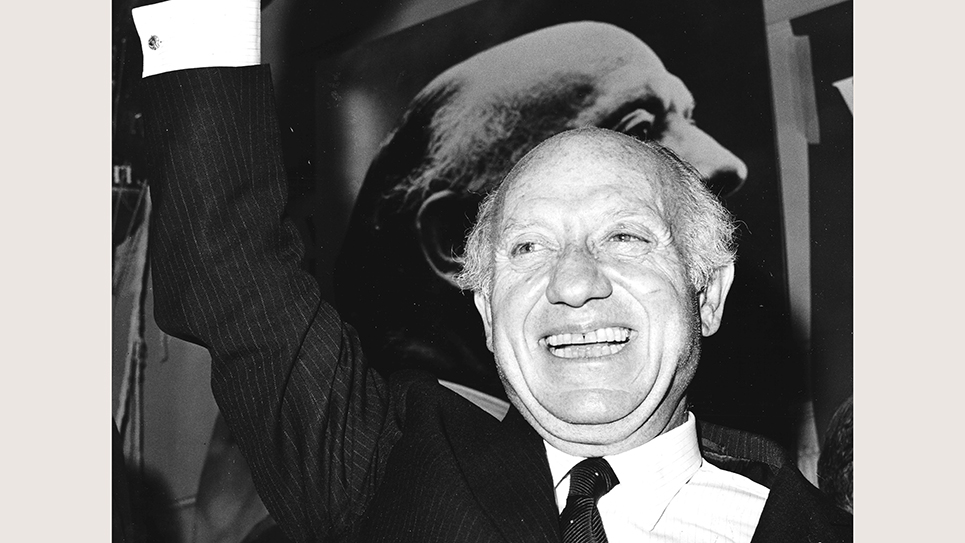
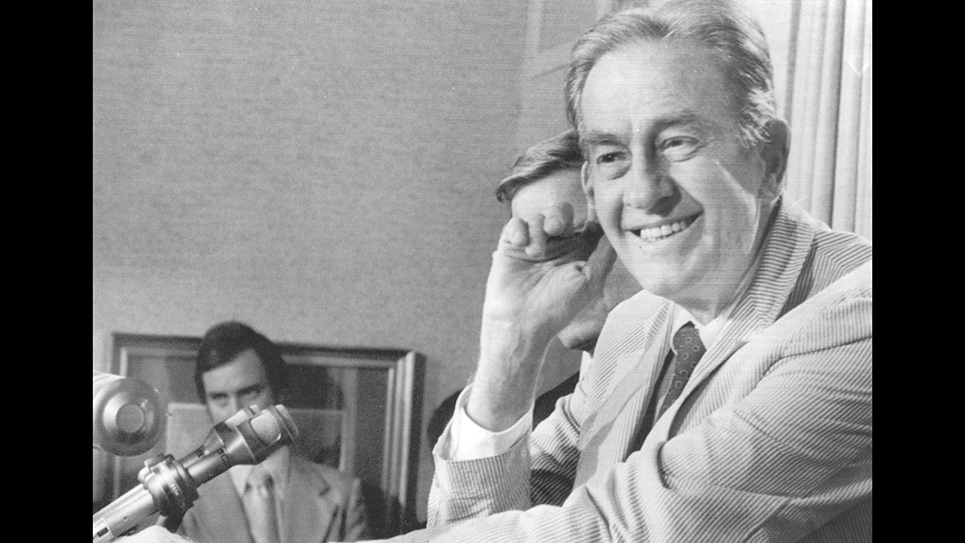
Clifford Phillip Case was one of the last of his kind, like his contemporary Jacob Javits of New York; a liberal Republican in a state dominated politically by Democrats. Tall and thin, 6 feet tall and weighing 158 pounds, with a toothy smile, Clifford Case was one of the best vote-getters in New Jersey.
The son of a Dutch Reformed minister and his wife, Case attended Columbia Law School and married his sweetheart, Ruth Miriam Smith, whom he had met while attending Rutgers University. Ruth and Clifford Case had one son and two daughters.
Case had demonstrated repeatedly his ability to be elected, having won election to the U.S. House of Representatives in 1944, beating his opponent handily in a year when Franklin D. Roosevelt headed the Democratic ticket for the fourth time. Case proved to be highly popular inside his congressional district, never once dipping below 55% of the vote and in 1952 he won by receiving 20,000 more votes than any other candidate had ever received inside New Jersey’s Sixth District. Congressman Case ran 10,000 ballots ahead of the highly popular Dwight D. Eisenhower, the GOP presidential nominee in 1952.
Case had carefully charted a political course as a liberal Republican, which was highly popular inside the Sixth Congressional District of New Jersey. Clifford Case seemed unbeatable in general elections but faltered inside GOP primaries where voters tended to be more conservative. Case resigned his seat in the House after having been selected to head the Ford Foundation’s Fund for the Republic in August of 1953.
There was opposition to Case from inside his own party from the beginning. When former Congressman Case got up to speak at the Morris County Fair, a handful of Republicans picketed, carrying signs that read: “You’re off base if you vote for Case.” At the time, Republicans held both of New Jersey’s seats in the United States Senate. H. Alexander Smith had been handsomely reelected in 1952, and Governor Alfred E. Driscoll had left office in 1954 after having two terms in office. Yet the Republicans had been badly defeated in the 1953 gubernatorial elections. Robert Hendrickson, the junior senator from the Garden State, was poised to run for a second six-year term, but a great many Republicans worried he could not win a general election. Hendrickson had a problem with alcohol, which had impaired his effectiveness in representing New Jersey, and it was becoming more widely known. Much of the leadership of New Jersey’s Republican Party urged Clifford Case to run instead.
Senator Hendrickson dawdled until the last moment before finally announcing he would forego a reelection campaign. President Eisenhower later appointed Hendrickson to serve as America’s ambassador to New Zealand. Republican Party leaders lured Case away from his $40,000 (quite nearly $500,000 today) post to become the GOP nominee for the United States Senate. When Case made a statement critical of Senator Joseph McCarthy of Wisconsin, it ignited opposition from the most conservative Republicans in the Garden State who complained the former congressman was too liberal. James Selvage, onetime press agent for the National Association of Manufacturers, accused Case of having been “a darling of the Americans for Democratic Action and the CIO.” That brought a detailed and sharp reply from Samuel L. Bodine, chairman of the New Jersey Republican Party. Bodine dismissed Selvage’s charges as a litany of “false statements, distortions and misrepresentations.” Selvage had charged that as a congressman Clifford Case had “voted to kill the Taft-Hartley Act,” the House sponsor of which was Fred Hartley of New Jersey. Bodine rebutted Selvage, noting that Congressman Case had in fact “voted for the Taft-Hartley Act, against recommittal, and for passage over Harry Truman’s veto.”
The hope of the most conservative element opposed to Case was the hope to cause him to surrender the GOP nomination and replace him with former Congressman Fred Hartley. The Democrats had nominated Congressman Charles Howell, who, while watching the Republicans fight amongst themselves, chortled, “I hesitate to interfere in someone else’s family quarrel, but it is hard to remain silent when I hear Republicans saying things about one another which I have never dreamed saying about my opponent.”
The most widely read news magazine in the world, Henry Luce’s TIME, watched in astonishment at what it referred to as the “GOP suicide attempt in New Jersey.” Luce was a Republican and Case was featured on the cover of TIME magazine in its October 18, 1954, edition to help give a boost to his campaign. TIME observed that New Jersey was a closely divided state politically as it was heavily industrialized and had a very large organized labor vote. Yet the suburban areas of the state bordering Philadelphia and New York City were friendly to more moderate or Republican candidates. The once powerful Hudson County political machine run by Frank Hague, former mayor of Jersey City, had the vague smell of corruption about it and the entire Garden State’s politics carried more than a whiff of the same aroma. As a result, New Jersey also had a large number of reformers and good government activists.
Case was also bolstered by the strong support of President Eisenhower, who invited the former congressman to the White House. Once in the Oval Office, Case was promptly and strongly endorsed by President Eisenhower. Speaker of the House Joe Martin, Vice President Richard Nixon, and Senator Ed Martin of Pennsylvania were dispatched to New Jersey to campaign on Case’s behalf. Walter Edge, who had twice been elected to the United States Senate and won two nonconsecutive terms as governor, came roaring out of semi-retirement to denounce “part wreckers” and campaign for Case. Corruption was an issue during the campaign, but Republicans were on the defensive as it had just come to light that former Governor Harold Hoffman had embezzled some $300,000 before his death. Another scandal revolved around another Republican governor’s staffer who had been taking bribes from gangsters. And there was an ugly controversy surrounding former GOP Governor Alfred Driscoll who had tried hard to get a mobster out of prison. Case pointed out he had nothing to do with any corruption, but Howell was making headway. The administration of Governor Robert Meyner had been busy rebuilding New Jersey’s Democratic Party and would produce results that lasted for decades to come.
Clifford Case stuck to the middle ground, and it proved to be a winning strategy, as Case only eked out a very narrow victory over Congressman Howell, winning by exactly 3,370 votes out of more than 1.7 million ballots cast. A write-in effort for Fred Hartley won just 7.025 votes, less than half a percent of the total vote. It was the closest Senate election in New Jersey’s history to that time.
On January 3, 1955, Clifford Case took the oath of office and served for the next four years with H. Alexander Smith, who concentrated upon foreign affairs as a member of the Senate’s foreign Relations Committee. For the next twenty-four years, Senator Case proved to be very popular with the people of New Jersey and was a favorite of the eastern news media. At the time, East Coast Republicans were not yet extinct, and Clifford Case was one of a number of eastern Republicans like Margaret Chase Smith of Maine, Leverett Saltonstall of Massachusetts, Jacob Javits and Kenneth Keating of New York.
Throughout his congressional career, Case was one of the most liberal Republicans in the House or Senate. The senator was frequently asked why he remained in the Republican Party. “I am a Republican, and I believe in the Republican Party. But I have my own convictions as to what the Republican Party should stand for, and I intend to fight for them as hard as I can. And I will not be driven away from my Republicanism simply because some Democrats happen to agree with me on some issues – – – and some Republicans don’t.”
Case continuously supported civil rights legislation and was one of those who protested vigorously when the Georgia House of Representatives refused to seat Julian Bonds. Case was also one of thirteen GOP senators who voted to create the Medicare program. Senator Case was an important supporter of President John F. Kennedy’s “New Frontier” and Lyndon Johnson’s “Great Society.”
Case’s politics proved to be popular in the Garden State. In 1960, John F. Kennedy carried New Jersey with 1,385,415 votes to 1,363,324 votes for Richard Nixon. At the same time, Senator Clifford Case carried all of New Jersey’s 21 counties but three and defeated Democratic candidate Thorn Lord by 332,447 votes. Six years later in 1966, Case was reelected overwhelmingly, winning 60% of the vote and beating Democrat Warren Wilentz by quite nearly 500,000 votes while carrying 20 of New Jersey’s 21 counties. In 1972, Senator Case carried every county in the Garden State while beating former Congressman Paul Krebs by almost 800,000 ballots and tallying quite nearly 63% of the vote.
In 1978, Senator Clifford Case faced his usual challenge inside the Republican primary. Yet his challenger proved to be more formidable than most. Jeff Bell had been an important part of former California Governor Ronald Reagan’s strong bid to take the GOP presidential nomination from President Gerald Ford. Bell ran as an opponent of reducing the income tax, which proved to be highly popular with most New Jersey Republicans. Bell upset the 74-year-old Case inside the GOP primary, winning by 3,473 votes. Jeff Bell lost the general election to Bill Bradley by almost 300,000 votes. Bell lost the GOP senatorial nomination in 1982 to Congresswoman Millicent Fenwick and the 2014 general election to Cory Booker. Jeff Bell had moved to New Jersey specifically to run against Senator Case.
One veteran Republican political operative commented after the votes were tallied, “It looks like the Republicans’ death wish has come through again. The Republicans have again snatched defeat from the jaws of victory.” Senator Case had been confident of victory, and polls had shown him leading by a comfortable margin. As has happened many times with an incumbent who loses an election, complacency took a toll on the vote totals. Overconfidence on the part of the campaign lulled supporters into a false sense of security, and they made little effort to turn out the vote. Case’s 24 years as a maverick, deriving much of his support from Independents and Democrats who crossed party lines to support him in general elections, proved to be a sword which cut both ways. “The fact that Cliff got a lot of lukewarm support is reflective of the support he used to give,” one observer remarked.
Case was long accustomed to the vagaries of elective politics and mused, “I think I can honestly say that it’s miraculous that I was in politics for 40 years and managed to stay that long.”
Jeff Bell had targeted those who vote in Republican primaries while the Case campaign had not, and it was the difference between victory and defeat. After his retirement from the Senate, Case affiliated with a prestigious New York law firm in its Washington, D.C. office. The former senator also accepted a post to lecture occasionally at Rutgers’ Institute of Politics. Clifford Case did not get to enjoy a lengthy retirement as he was diagnosed with lung cancer in 1981. That August, the former senator underwent surgery, but the cancer was relentless. Clifford P. Case died on March 5, 1982, in Washington, D.C. Case was outlived by his wife Ruth by almost 20 years, and his widow helped to keep her husband’s legacy alive during her own remaining years.
© 2026 Ray Hill